
Research
Community Engaged Research Training (CERT) – “Health Program Evaluation” Presentation slides
Health Program Evaluation_Li_Fenollar_Ralls_Tavake Pasi
Construction and Older Adults
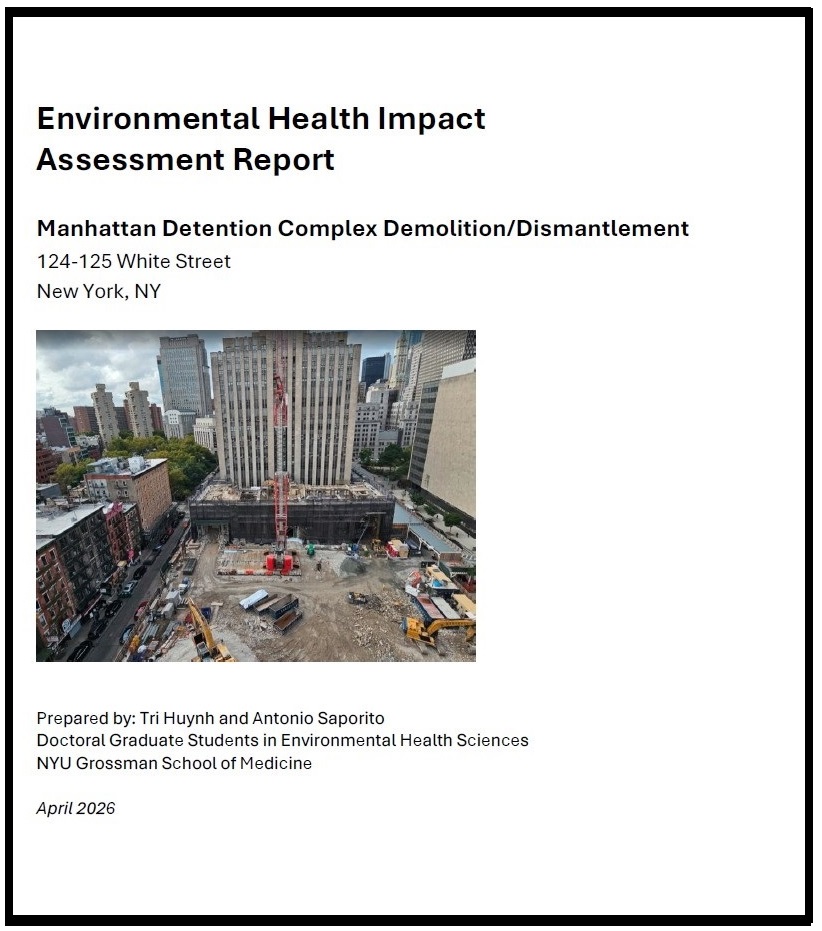
Older adults living in dense urban neighborhoods may be especially vulnerable to the environmental and psychosocial impacts of prolonged construction activity, including air pollution, noise, stress, and disruptions to daily life. In neighborhoods such as Manhattan’s Chinatown, where many residents live in close proximity to major development projects, community concerns about construction-related health impacts have continued to grow. In 2019, a coalition of community partners, led by Neighbors United Below Canal, Chung Pak LDC, and Hamilton-Madison House, reached out to NYU Center for the Study of Asian American Health (CSAAH) to collaborate on activities to examine the effects of long-term construction and environmental exposures on older adults and other vulnerable populations in Chinatown. Our collaborative work includes reports on construction-related health impacts and air quality around the Manhattan Detention Complex (MDC) construction site, as well as community-engaged environmental monitoring, literature reviews, community education and outreach, storytelling, mitigation recommendations and testimonies to city agencies, community boards and policymakers.
- One-page Summary Report in Chinese
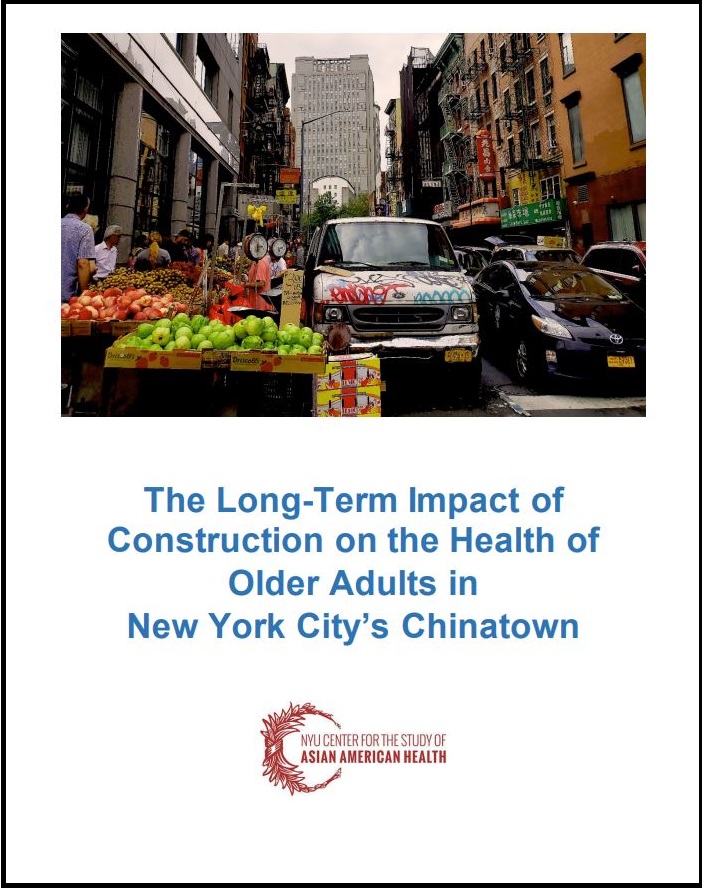
- The Long-Term Impact of Construction on the Health of Older Adults in New York City’s Chinatown (2019)
 **NEW** Chinatown Environmental Health Impact Assessment Report (2026)
COVID-19 Resources for South Asian Americans (SAALT)
COVID-19 resources tailored for South Asian Americans organized by South Asian Americans Leading Together (SAALT).
CSAAH: CVD/Diabetes Resources
The Center for the Study of Asian American Health (CSAAH) has developed cardiovascular and diabetes educational materials in multiple languages for the Asian American communities.
CSAAH’s Community Empowered Research Training (CERT) – “An Academic-Community Partnership” Presentation slides, Catlin Rideout
Community Empowered Research Training_Catlin Rideout
CSAAH’s Diabetes Research, Education, and Action for Minorities (DREAM): Project Materials and Toolkit
The DREAM (Diabetes Research, Education, and Action for Minorities) Project aims to develop, implement, and test a CHW program designed to improve diabetes control and diabetes-related health complications in the Bangladeshi community in New York City. DREAM has developed and released tool and materials from the project in English and Banga.
CSAAH’s Diabetes Research, Education, and Action for Minorities (DREAM): Project Materials and Toolkit
The DREAM (Diabetes Research, Education, and Action for Minorities) Project aims to develop, implement, and test a CHW program designed to improve diabetes control and diabetes-related health complications in the Bangladeshi community in New York City. DREAM has developed and released tool and materials from the project in English and Banga.
Data Collection and Analysis Yumary Ruiz
Data Collection and Analysis_Yumary Ruiz
Empowering Pacific Islander Communities (EPIC)
EPIC advances social justice by engaging Native Hawaiian & Pacific Islanders in culture-centered advocacy, leadership development, and research. The founders prioritized building a strong and unified advocacy voice for Pacific Islanders by collecting and publishing disaggregated data to illustrate the needs of NHPI families; and establishing a pipeline of strong leaders who can be advocates and influencers in, and on behalf of, the community.
Federal Guide of Grants and Programs for the Native Hawaiian Community (2015)
A 2015 collaborative report developed by the United States Department of the Interior, Papa Ola Lōkahi, Native Hawaiian Education Council, and Council for Native Hawaiian Advancement to provide guidance to local Native Hawaiian organizations and individuals in finding grant and program opportunities that support various causes in health, housing, education, and labor.